
The European Housing Model That Puts Community Before Profit – Why It Works
Susanne Jäger has lived in her apartment in the center of Vienna for over a decade. When she first moved in, she didn’t think she’d be there long. But the rent, which was €370 ($430 USD) a month at the time, convinced her to stay. Today, her rent is €420 ($489 USD) a month. “I was never offered a better deal,” she tells Monocle.

Central Vienna, Austria
Jäger’s rent is a sharp contrast to rent in the U.S. In California, the average rent is $2,200 to $2,700 per month.
Jamica wanted to find the breathing room to save for her kids’ college tuition. She moved back to California with the desire to find better services for her son with autism. When she found CHOC’s Monarch Apartments in Palm Springs, it was exactly what she needed.
“I’m able to put a little bit of something away for [my kids] for college,” she says.
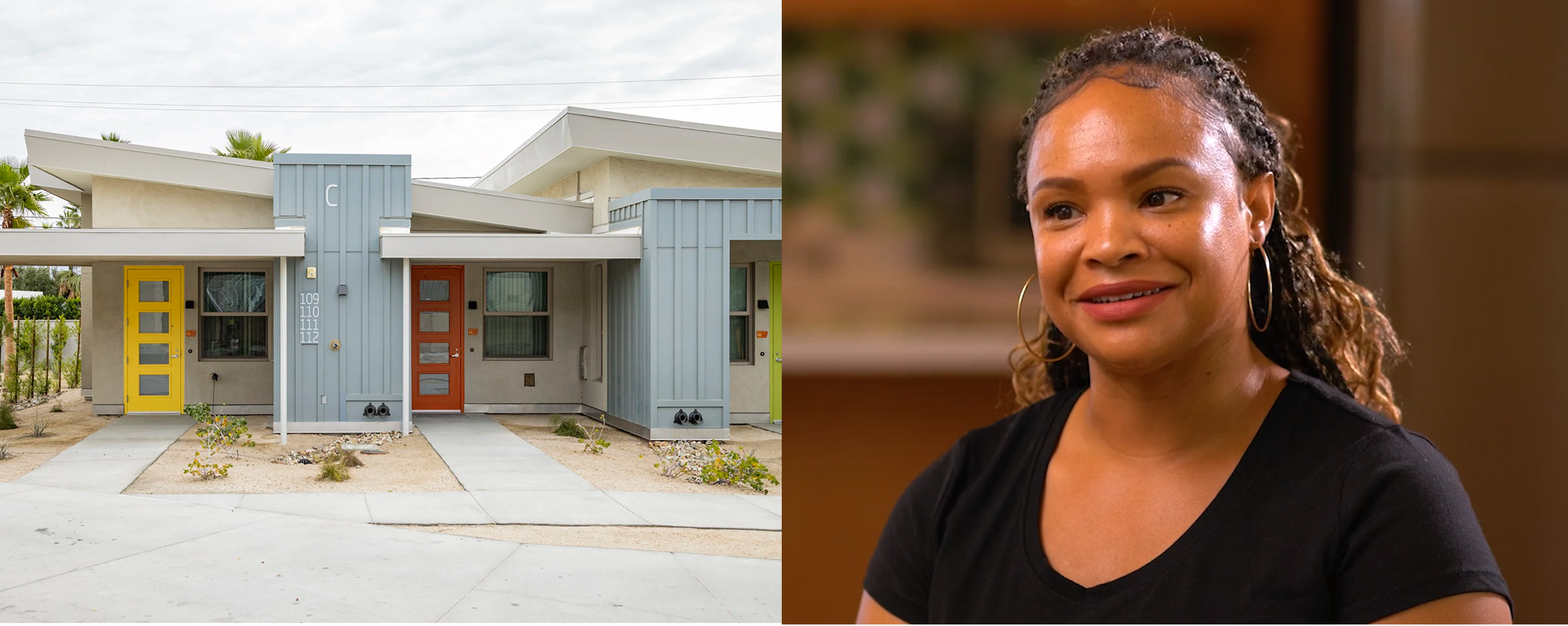
Jamica, Resident of the Monarch Apartment Homes
Jamica and her children now have a home and the means to build a stable future because of policy decisions made nearly a century ago. Franklin D. Roosevelt's New Deal of the 1930s treated housing as a public good, establishing programs like the National Housing Act and the Federal Housing Administration (FHA) that stabilized housing markets, increased access, and improved living conditions across the country.
But today, the U.S. has drifted far from that vision, says Joy Silver, chief strategy officer at CHOC. Joy has spent three decades advocating for affordable housing in California. She's watched the gap between need and supply grow steadily wider.
Housing affordability in the U.S. has hit historic lows. Home prices and rents are rising much faster than wages. Recent data shows that nearly half of all renter households spend over 30% of their income on housing. Many face severe cost burdens, paying over half their income for housing.

Joy Silver
Chief Strategy Officer at CHOC
In California, over 40% of households are burdened by housing costs. Despite housing roughly 12% of the nation's population, the state accounts for more than a quarter of its unhoused individuals.
Housing insecurity in the U.S. looks like parents having to choose between paying rent and buying groceries. And while a shortage of affordable housing isn’t unique to the U.S., the way it’s handled here isn’t working, says Joy.
In the U.S., housing is a commodity. In places such as Austria and Switzerland, it's a human right.
In Vienna, more than half of the city's two million residents live in a form of subsidized housing. There's also a generous income cap for applicants -- €59,320 ($69,120 USD) a year for a single person and €88,400 ($103,000 USD) for a couple.
Within this framework, more people can qualify for affordable housing. It becomes normalized, rather than only an option for those in crisis. Housing authorities deliberately spread affordable apartments across all districts to prevent economic segregation.
The result is a city that integrates classes and diverse income levels rather than stratifying them.
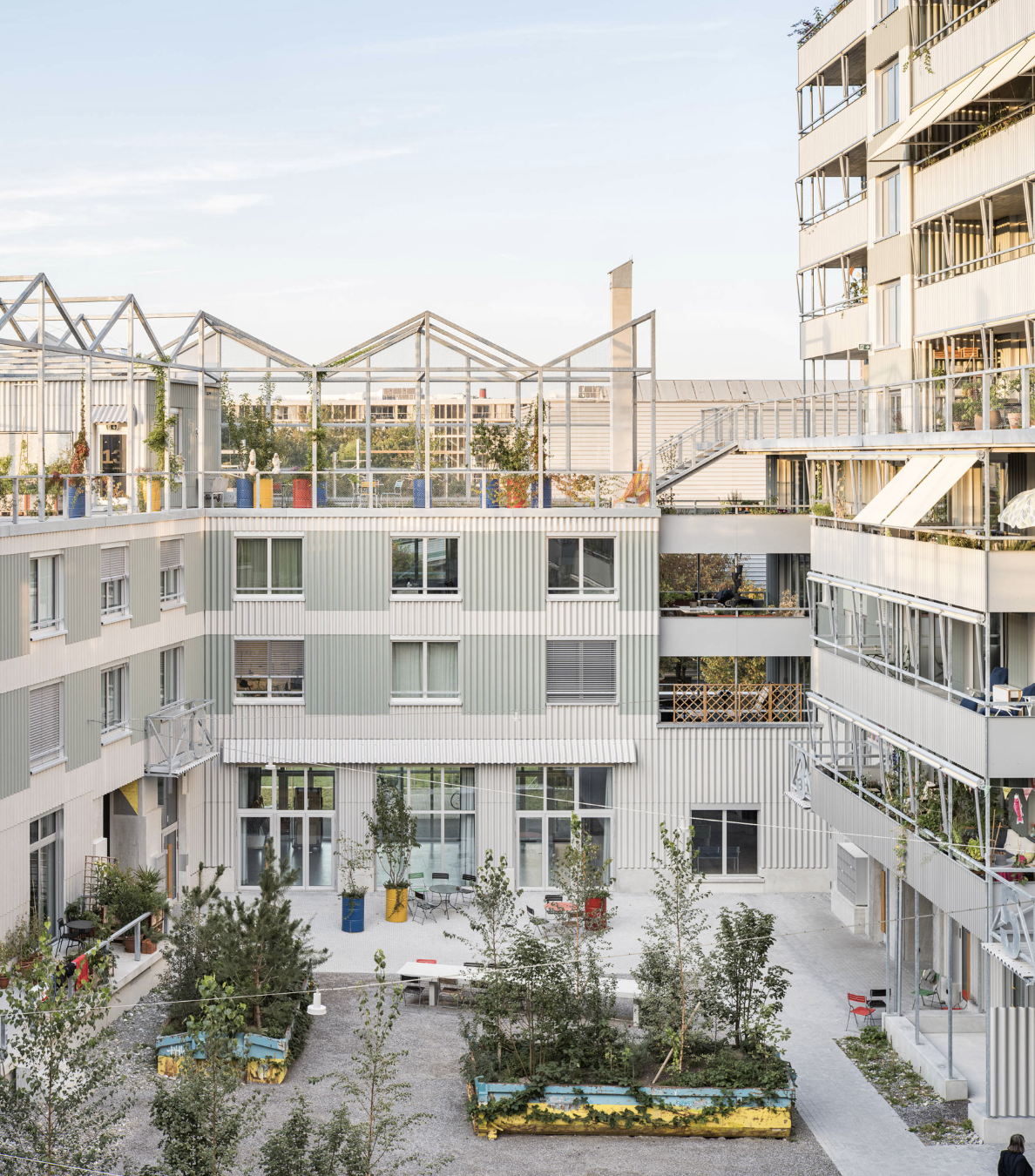
Westhof cooperative housing near Zurich, Switzerland designed by architecture studio Conen Sigl. The cooperative is topped by a greenhouse-style pergola referencing the area's industrial and agricultural history. Image courtesy of Deezeen.
Switzerland has taken a different approach. The country has used cooperatives (co-ops) for decades to offer a third option, rather than renting or buying. It’s one that centers community over profit.
New residents buy shares to gain admission to the building and get one vote in the co-op, regardless of how many shares they own, reports the New York Times. When someone moves out, their shares are returned to them.
Most Swiss housing co-ops are self-funded, but the newest co-ops receive government funding to get started. Rent prices are based strictly on operating costs, rather than generating profit for developers or property owners. This model builds shared community, where each individual family’s success enriches the other.
European affordable housing is about more than access. It focuses on integration and quality.
Developments often incorporate long-term planning horizons that enable energy-efficient construction, transit accessibility, mixed-use spaces, and community green areas. Social initiatives such as childcare, employment, and wellness programs are frequently embedded within housing communities, reflecting a holistic understanding that affordability means opportunity and well-being, not just a roof overhead.
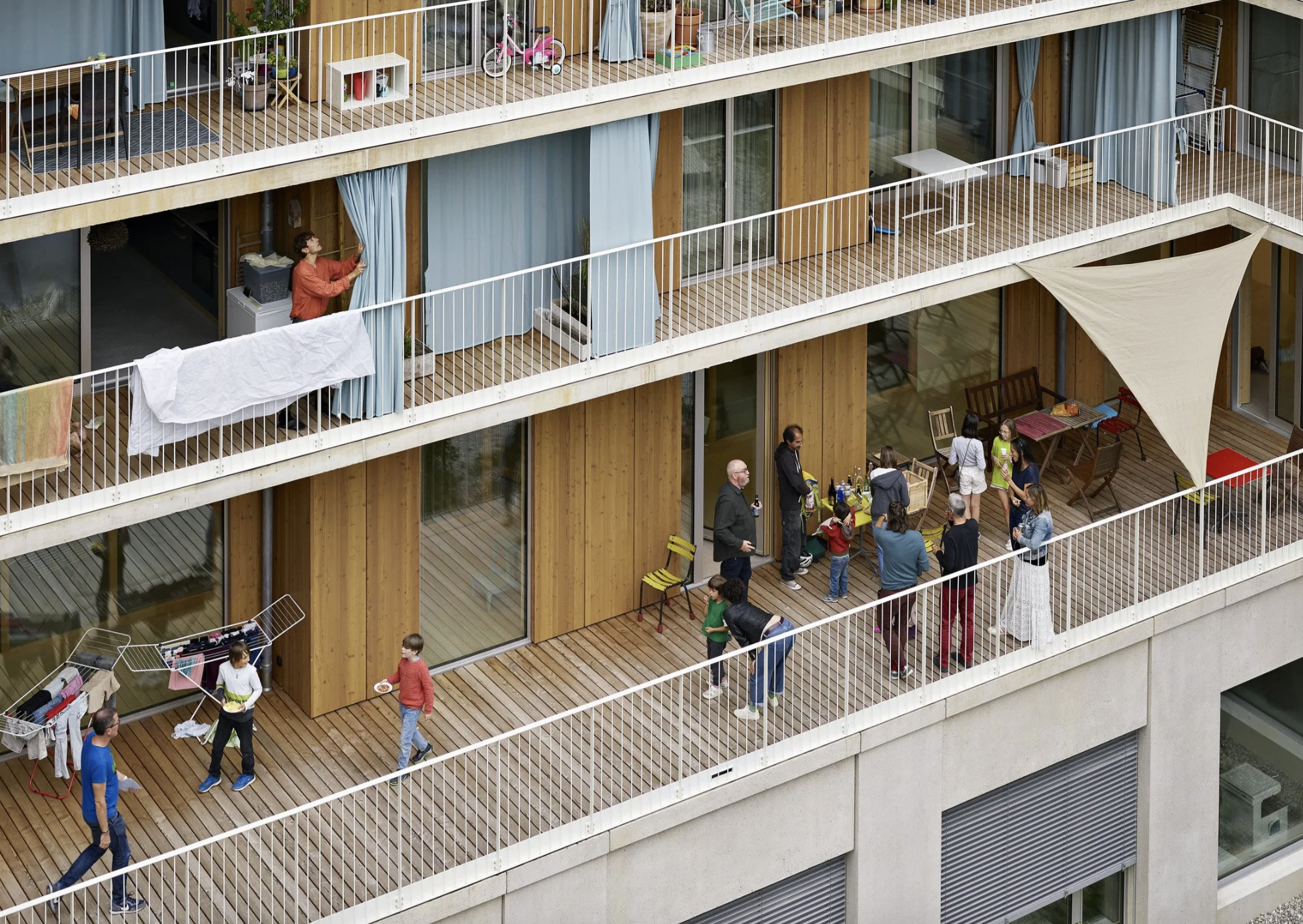
Le Bled cooperative building in Lausanne, Switzerland designed by TRIBU Architecture. Photo by Dylan Perrenoud. Courtesy of Archinect.
The U.S. system works very differently, says Joy.
“It largely relies on a complex and fragile financing model, dominated by Low Income Housing Tax Credits, tax-exempt bonds, and patchwork subsidies. While effective in enabling some affordable housing production, this model is highly sensitive to fluctuations in interest rates, construction costs, and rents. As a result, many projects end up prioritizing financial feasibility over innovation, quality, or resident services.”
Europe's approach extends beyond Austria and Switzerland. “France dedicates nearly 17% of its housing stock to public or social housing,” says Joy. “Finland's ‘Housing First’ initiative has reduced the number of unhoused residents by over 40% in the past two decades.”
And in 2025, the European Commission launched the European Affordable Housing Plan, a coordinated effort to accelerate housing production and protect affordability across the continent.
These are not isolated experiments. They’re a blueprint for what sustained, values-driven policy can achieve.
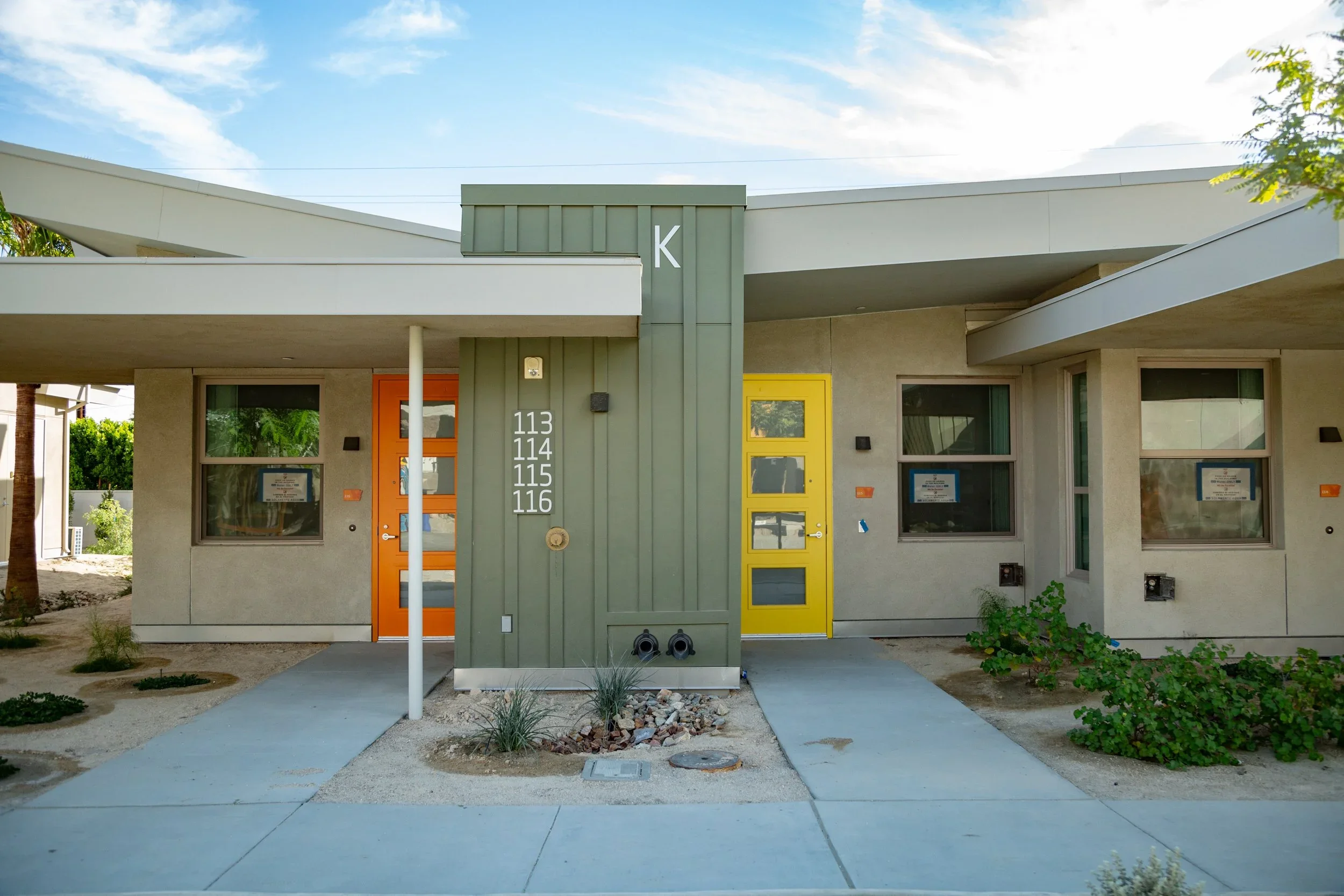
CHOC’s Monarch Apartment Homes

Splash pad for kids and families, CHOC’s Monarch Apartment Homes
Now that Jamica has found a home at The Monarch Apartments, she has a stable foundation to help her build a future for her children. As the cited European examples show, a society that values the collective over the individual helps everyone thrive.
Joy believes the U.S. can take meaningful steps inspired by the approach to affordable housing from abroad.
“The U.S. must significantly increase public investment in social and affordable housing, alongside reforms that simplify and stabilize financing mechanisms,” she says. “Comprehensive community services — from childcare and workforce development to health and wellness — must be integrated into affordable communities. And U.S. policymakers and developers should adopt long-term planning frameworks that emphasize durability, adaptability, and integration with transit and economic hubs. That's how you create communities where affordability is paired with real quality of life.”
“History teaches that housing crises are ongoing conditions rather than momentary events,” says Joy. “The critical question remains: will public institutions rise to these challenges with sustained commitment, or retreat into fragmentation?”
For Joy, the path forward is clear. “The U.S. must recommit to affordable housing as a core public good and essential infrastructure,” she says. “A future where affordable housing is accessible, sustainable, and truly affordable for millions is not only possible, it is necessary to restore dignity, stability, and opportunity across the nation.”
“The U.S. has done it before. It can do it again.”
Learn more via Joy Silver’s recent Multi-Housing News piece, “How Europe Offers a Way Forward on Housing” (published May 13, 2026).
Founded in 1984, Community Housing Opportunities Corporation (CHOC) is a non-profit affordable housing developer, energy, services and property management provider headquartered in Fairfield, CA; we create and manage equitable communities for individuals, families, seniors, and those with special needs. CHOC believes that economically integrated affordable housing is key to self-sufficiency and achievable with enriching, supportive programs that instill pride in residents, stabilize families, and improve local economies. Visit CHOCHousing.org. Sign up for our monthly newsletter, The Circle.